





Homechool Language Arts Curriculum
Beyond the Page is a comprehensive homeschool language arts curriculum built on nearly two decades of curriculum development. We design every lesson to help students think deeply, read widely, and write with clarity and purpose.
What Language Arts Includes
Language arts is more than reading and grammar. Our program integrates:
- Reading and literature
- Writing and grammar
- Vocabulary and spelling
- Story elements and figurative language
- Research and critical thinking skills
Students begin working with these ideas early. Even young learners analyze stories, explore language, and build research habits.
Children Learn Through Story
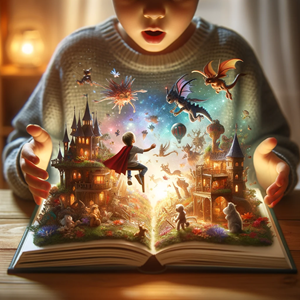
Facts are easy to forget. Stories are easy to remember.
We build our entire language arts program around this idea. Literature is not a separate reader or an extra activity. It is the foundation of every lesson. This is a true literature-based curriculum.
Students do not just read a book and move on. Each story becomes the context for everything that follows. Grammar instruction, writing assignments, vocabulary, and story analysis all come directly from the text students are reading.
For example, students may:
- Analyze character, plot, or point of view from the current novel
- Practice grammar using sentences taken from the text
- Learn vocabulary in the context of the story
- Write paragraphs, essays, or creative pieces based on events and ideas from the book
This approach keeps learning connected and meaningful. Students engage more deeply because they care about the story. They take ownership of their work because it relates to something they understand. As a result, comprehension improves and skills develop in a more natural and lasting way.
Students read every day. Over the course of a year, they engage with novels, poetry, biographies, short stories, and nonfiction texts. We select both classic and contemporary works to provide a balanced and engaging experience.
How Learning Progresses
Early Elementary
Students work with picture books but engage in deep thinking. They identify story elements, compare texts, and explore themes.
For example, students may read multiple versions of Cinderella and:
- Identify common plot elements
- Compare similarities and differences
- Analyze setting and theme
After learning concepts, students apply them in their own writing.
Upper Elementary (Beginning with Age 7-9)
Students transition to novel-based units. Each three-week unit focuses on a specific concept such as character, plot, or point of view.
Students:
- Read daily and respond to questions
- Analyze how authors develop stories
- Complete writing assignments tied to the text
Writing grows from single paragraphs to multi-paragraph essays.
Integrated Learning
We connect language arts with science and social studies whenever possible. A novel may reflect the same themes students study in other subjects. This approach strengthens understanding and keeps learning relevant.
A Typical Day
Each day begins with reading and thoughtful questions. These questions move beyond recall and ask students to:
- Interpret character decisions
- Predict outcomes
- Explain reasoning
Students then complete activities that build skills such as:
- Story analysis
- Vocabulary development
- Figurative language
- Writing practice
Lessons balance rigor with engagement. Students think deeply while staying connected to meaningful content.
Our Approach to Writing

We treat writing as a daily practice. Students do not skip writing. They build skill through consistent effort.
Read First
Strong writers are strong readers. Students absorb grammar, structure, and style through extensive reading.
Write and Revise
Students learn grammar through writing and revision, not isolated worksheets. Parents guide students to correct mistakes and apply rules in context.
Build Skills Over Time
- Age 4–5: Letter formation and simple words
- Age 5–7, Age 6-8: Sentences and short responses
- Age 7–9, Age 8-10: Paragraph development
- Age 9–11+: Structured essays and advanced writing
Focus on Expression Early
Young students focus on expressing ideas without fear of mistakes. As they grow, expectations for grammar and structure increase.
The Writing Process
Students follow a clear process:
- Prewriting
- Drafting
- Editing and revision
- Final copy
Each assignment focuses on specific traits such as organization, word choice, or sentence structure.
Student Independence with Support
Older students can work more independently with clear instructions and structured lessons. Parents remain involved to guide, support, and discuss learning.
Research and Critical Thinking
Students practice research skills within meaningful contexts. They gather information, organize ideas, and present findings. These skills appear throughout the curriculum, not as isolated tasks.
Support for Parents and Teachers
Every lesson includes:
- Clear objectives
- Materials lists
- Answer keys
- Discussion prompts
We also provide:
- Online access to curriculum
- Student work portfolios
- Flexible schedules
Choosing the Right Level
We use age ranges instead of grade levels.
- Start in the middle of the age range
- Evaluate reading and writing skills
- Use our placement assessment if needed
Writing ability usually determines placement once a student becomes a strong reader.
Learn more about choosing an age level.
Our Goal
We aim to develop thoughtful readers and confident writers. Students do not just complete assignments. They analyze, create, and communicate with purpose.